Let me be blunt. Negative Google reviews for lawyers are not optional anymore. They are the price of practicing in a world where clients can publish their version of events in one click.
But you can control the narrative with your response.
Most lawyers get that part wrong. One angry reply on Google does more damage to a firm than the original one‑star review ever could. It looks bad to clients and raises ethics questions. And in 2026, it gives AI systems a quotable piece of text to repeat back to the internet.
You do not have to be that lawyer.
A Real Example of What Not to Do
I want you to imagine this as if it were your own review thread.
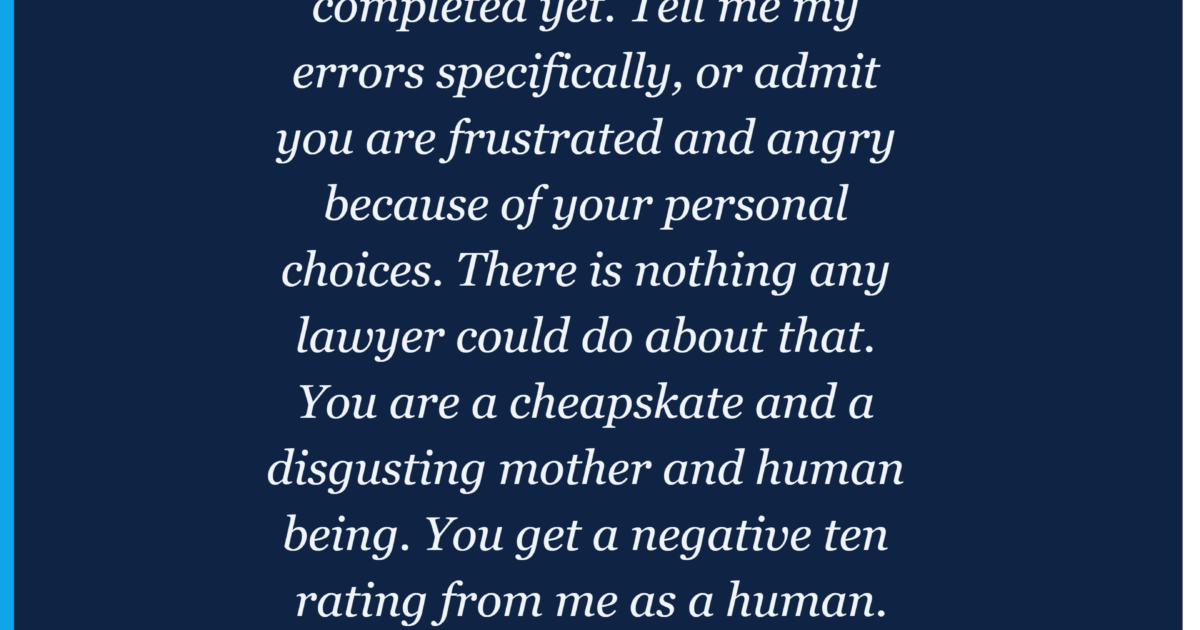
A client leaves a one‑star Google review about a family case. The lawyer replies publicly:
“Tell me what I did wrong on your case. It is not even completed yet. Tell me my errors specifically, or admit you are frustrated and angry because of your personal choices. There is nothing any lawyer could do about that. You are a cheapskate and a disgusting mother and human being. You get a negative ten rating from me as a human.”
That reply is worse than the review.
You may feel some sympathy. Maybe you have had a client who was unfair, dishonest, or impossible to satisfy. Maybe you have drafted a reply like that in your own head and deleted it before posting.
I am telling you, as someone who looks at this professionally: you cannot afford to let that version of yourself appear on Google. Not once.
Why Negative Google Reviews for Lawyers Actually Matter
Let’s talk about the numbers before we talk about feelings.
In multiple industry studies, more than 90% of consumers read online reviews before choosing a professional, and a large majority treat those reviews as seriously as personal recommendations. That includes law firms, whether they admit it or not.
Separate research shows that 56% of consumers changed their opinion of a business based on how it responded to a review. Not the review itself.
When someone searches your firm name, they are not just reading the stars. They are reading what you said back.
If your reply looks like the example above, the review becomes the least of your problems. The client’s version of events is one data point. Your response becomes a permanent record of how you speak about clients when you are angry.
That is what prospective clients are judging.
Seven Deadly Mistakes in That Kind of Reply
I am going to walk through the mistakes in that reply as if we were looking at your own Google Business Profile together.
If you have ever replied in anger, you will recognize some of these.
Turning a Bad Review Into a Personal Attack
Calling a client “a disgusting mother and human being” is not a rebuttal, but a character attack.
From the outside, nobody knows who is right in that dispute. They do not know what the case was, what the facts are, or what you had to navigate. They only see a lawyer losing control in public.
Prospective clients know that, one day, they might also be frustrated with their lawyer. They ask themselves, “If I leave unhappy, is this how this person will talk about me?”
If the answer feels like yes, they go somewhere else.
Escalating the Conflict Instead of Defusing It
Every serious guide on negative Google reviews for lawyers starts with the same sentence: do not respond in the heat of the moment. Take a breath. Step back. Draft later.
That reply was clearly written in the worst possible moment.
You can be right about the underlying case and still be wrong about your reaction. Online, only the reaction survives.
Confirming Facts About the Representation
Saying “your case is not completed” and “there is nothing any lawyer could do” confirms elements of the matter in public.
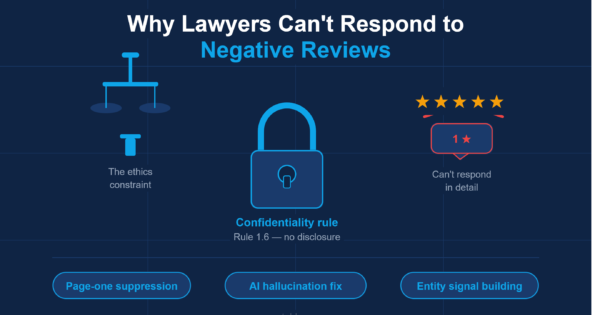
You know the rule. Confidentiality does not disappear because a client posted something unfair. The duty to protect information relating to the representation is not conditional on their behavior.
You do not get to explain your side of the case in a Google reply. The ethics opinions on negative online reviews for lawyers are very clear about this. They explicitly reject the idea of using public replies to defend yourself point by point.
Creating New Evidence for Bar Counsel and Insurers
If that client ever files a grievance, this reply is Exhibit A. If they sue, it is Exhibit A. If the story reaches a journalist, it is Exhibit A.
You did not just respond to a review. You created a new piece of evidence someone else can quote and interpret.
The text about the client’s parenting and finances does not sit in isolation. It becomes part of the record bar counsel reads when they ask, “Is this lawyer exercising sound judgment under pressure?”
Making Yourself Look Unsafe to Future Clients
Put yourself in the shoes of a parent searching for a family lawyer in Houston, Nairobi, or Dubai.
They see the one‑star review and the lawyer’s reply. They do not know whether the underlying case was messy or whether the client was unreasonable. All they see is a lawyer calling someone “disgusting” in a public forum.
For a lot of people, that is a hard stop.
You can do brilliant work every day and still lose good clients because you look unsafe when challenged.
Feeding the Wrong Story to AI Systems
Google AI, ChatGPT, and Perplexity are now reading reviews and responses to build summaries of your firm. They are not pulling only your bio and your Avvo profile. They are reading your own words in the review thread.
If you give them a quote where you attack a client, those systems can ingest it as part of your narrative. Even if they do not repeat the exact words, the tone and content shape how they rank and describe your firm.
You are no longer just writing for the person who left the review. You are writing for every algorithm that will scan that page over the next five years, and it will hurt your GEO (Generative Engine Optimization).
Signaling That You Have No Process
The worst part of that reply is what it signals:
- There is no review response protocol.
- No cooling‑off period.
- No second pair of eyes.
- No ethics filter.
From an Online Reputation Management (ORM) standpoint, that is what I worry about. From an ethics and risk standpoint, that is what your malpractice carrier and bar counsel worry about.
If your only rule is “I respond however I feel in the moment,” you are one bad day away from a screenshot that lives forever.
What Ethics Guidance Actually Allows You to Say
You may be thinking, “If I cannot explain my side and I cannot defend myself, what am I allowed to say?”
The consensus across ABA Formal Opinion 496 and state ethics opinions on responding to negative reviews is simple and strict.
You can:
- Acknowledge that you take feedback seriously.
- State that ethical obligations prevent you from discussing case specifics.
- Invite the reviewer to contact you privately to discuss their concerns.
You cannot:
- Confirm or deny detailed allegations about the representation.
- Reveal confidential information to “correct the record.”
- Attack the client or injure them further in the matter.
The duty of confidentiality is not a nice theory. It is the rule. It is the reason so many ethics opinions say that the safest move, in some cases, is no public reply at all.
The Safe Reply Most Lawyers Will Ever Need
I want you to have one template you can post without thinking that keeps you inside both ethics and reputation boundaries.
For a negative Google review from a current or former client:
“Thank you for sharing your concerns. We take client feedback seriously. Our professional obligations prevent us from discussing case specifics in a public forum. We would be glad to speak with you directly about your experience. Please contact our office so we can review your concerns.”
It is boring, and you may hate it. That is fine.
What matters is:
- It acknowledges the review without conceding the facts.
- It does not confirm or deny any details about the case.
- It invites offline resolution.
- It is calm enough that bar counsel, prospective clients, and AI systems can read it without concluding you are unstable.
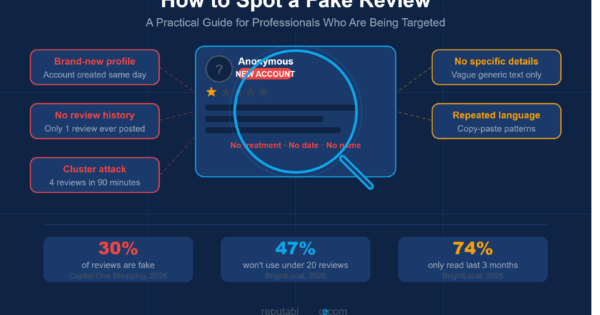
For a review you believe is fake – see the signs of fake reviews here – or left by someone you never represented:
“Thank you for your comment. We are unable to identify any matter matching the description provided. Our professional obligations prevent us from discussing case details in a public forum. If you believe you have worked with our firm, please contact our office so we can respond directly. We have also asked the platform to review this post against its policies.”
Then you use the platform’s reporting tools for fraudulent or harassing content.
You are not trying to win an argument, but trying to avoid giving the algorithm and the regulator more ammunition.
A Simple, Grown-Up Review Response Protocol for Your Firm
Treat negative Google reviews for lawyers as a process, not an improvisation.
You do not need an internal committee. You need a discipline you can stick to on a bad day.
- Wait 24 hours.
No responses drafted in the first hour. If you are angry, you are not writing for clients; you are writing for your own ego. That is how the worst replies happen. - Verify Whether This Is Truly a Client.
Check your case records. If you cannot match them, treat it as a misdirected or fake review and use the second template. - Decide Whether to Reply Publicly at All.
A short “one‑star, no details” review on a low‑traffic platform may not deserve a reply. A detailed review on Google or a major directory probably does. - Draft Your Reply Using the Safe Template.
No case details. No emotion. No “let me explain what really happened.” If you feel the need to explain, do it privately. - Run a Quick Ethics and Risk Filter.
Ask yourself:- Does this reply reveal anything I would not want bar counsel to read?
- Would I be comfortable seeing this screenshot in a grievance file?
- Post Once, Then Move On.
You are not there to argue. You are there to show that the firm is professional under pressure. Once you have done that, spend your energy on clients and on building more positive reviews.
Where Review Responses Fit in a Serious ORM Strategy
I am not telling you that a safe reply will fix everything. It will not.
Responding properly to negative Google reviews for lawyers is hygiene. It prevents you from making a bad situation worse. The real ORM work sits behind it:
- A review generation workflow that consistently asks satisfied clients for feedback in a compliant way.
- Clean, consistent Google Business Profile data: correct name, category, address, phone, and hours.
- Owned content and profiles that make sure you show up correctly when someone searches your name.
- Entity and schema signals that tell AI systems your actual story, not just the worst review.
You can be an excellent lawyer with a terrible digital story. The point of ORM for lawyers is to close that gap.
If the example reply above feels uncomfortably familiar, treat that discomfort as useful. It is the signal that you have outgrown “respond when angry” and need a process instead.
The Next Step if This Hit a Nerve
If you read this and can picture one or two reviews you already regret, you do not need a lecture. You need a clear picture of what clients and AI systems are seeing when they search your name.
That is what I do.
I run a free, eight‑area presence audit for individual lawyers and small firms. It covers:
- What is actually on page one for your name.
- How your Google rating and reviews look compared to your peers.
- Whether AI systems describe you accurately or rely on stale directories.
- Where the biggest risks and the fastest fixes sit.
Written, specific, and yours to keep whether or not we ever speak again.
If you want that one‑page clarity before you change anything, reach out at reputableo.com and say, “Audit my reviews.”
Not sure what Google and AI say about you right now?
I offer a free 8-area presence audit covering your search results, AI platform responses, Google Business Profile, and entity signals.
Get a Free Audit